 By Elena MorrisFictional contributor · Read disclosure
Updated
Who researches AOD-9604?
This profile is for readers exploring metabolic biology and the evidence behind this compound. Topic associations help locate research; they do not establish that a substance is suitable for personal use
Start with the beginner’s guide if the terminology is new, then read the limitations alongside the findings
What is AOD-9604?
AOD-9604 illustrates why a fragment should be evaluated on its own evidence rather than on the reputation of its parent hormone. A design intended to preserve one activity and avoid another still needs to produce a useful clinical effect. Readers should distinguish proposed lipolysis, changes in a laboratory marker, body-fat measurements, and sustained weight loss. This guide applies those distinctions to the research and regulatory discussion, avoiding the assumption that a familiar hormone-derived sequence is either clinically effective or inherently safe for repeated consumer use.
Also searched as AOD9604, Modified hGH fragment

How it works
The development rationale focused on separating proposed lipid-related effects from other growth hormone actions. That is a hypothesis about functional differences within a larger protein. Whether those differences produce clinically useful weight loss must be tested rather than inferred from the parent hormone’s biology or from an animal experiment.

Benefits & what the research shows
Research interest includes preclinical metabolic work and human development efforts. Commercial enthusiasm should be distinguished from convincing evidence of a useful treatment effect. To evaluate a weight-loss claim, readers need the actual randomized study, comparator, duration, participant characteristics, and adverse-event reporting rather than an isolated phrase such as fat-burning fragment.
Check the species, population, formulation, comparator, and endpoint before applying a result to a different situation
How to read a peptide study ↗What this evidence cannot tell us
Loss of body weight, change in visceral fat, and changes in laboratory markers are not interchangeable outcomes. A result from a growth hormone study also cannot be credited to AOD-9604 without direct testing. Evidence for a specific formulation does not validate every product sold under the same abbreviation.
Dosage & administration
No FDA-approved self-treatment dose is established for weight management. This page does not provide loading schedules, injection instructions, or combinations with other experimental peptides. A licensed clinician can discuss approved treatments that match an individual’s health needs.

Side effects & safety
FDA materials identify substantial gaps in safety-related information and characterization concerns for compounded preparations. Unknown long-term risks are particularly relevant when products are used repeatedly for cosmetic goals. Identity, impurities, and sterility add uncertainties that a molecular diagram or vendor certificate cannot resolve.

AOD-9604 vs related compounds
Compare the research questions and mechanisms. These summaries do not establish equivalent benefits or interchangeable products
| Compound | Research context |
|---|---|
| AOD-9604 | The development rationale focused on separating proposed lipid-related effects from other growth hormone actions. |
| Cagrilintide | Amylin participates in the regulation of satiation and food intake. |
| Liraglutide | Liraglutide activates the GLP-1 receptor, helping regulate glucose-dependent insulin secretion and appetite. |
Sourcing & quality
AOD-9604 is not an FDA-approved obesity treatment. Regulatory language about an ingredient in another context should not be presented as approval of an injectable drug or proof of weight-loss efficacy.
Regulatory details can change. Verify the current, product-specific record before making a clinical or purchasing decision
Understand FDA approval and research useInside the research
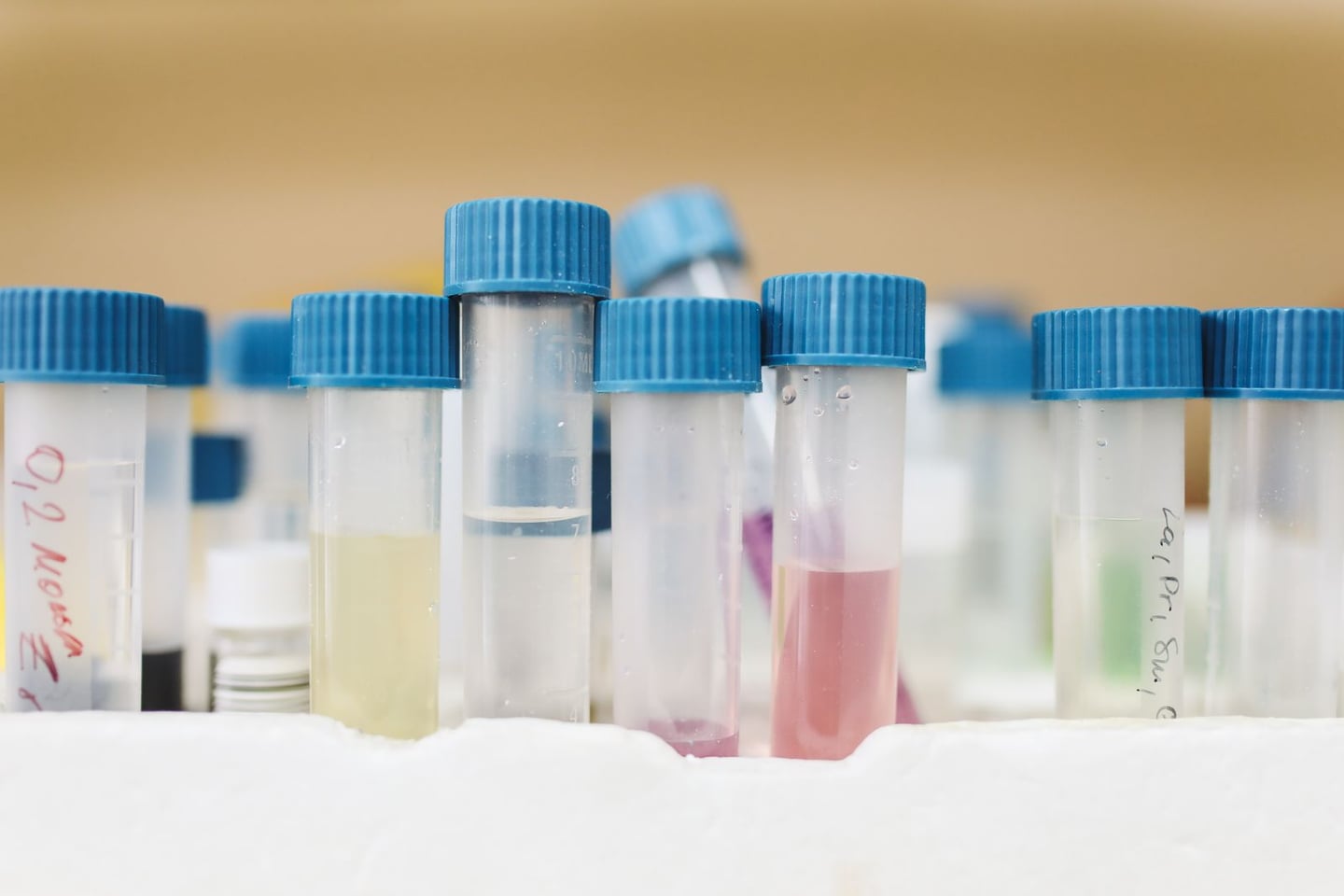
Photographs of clinical and laboratory settings, alongside the questions researchers investigate
 AOD-9604
The research setting
The development rationale focused on separating proposed lipid-related effects from other growth hormone actions.
 AOD-9604
How the research is investigated
Research interest includes preclinical metabolic work and human development efforts.
Frequently asked questions
Does being a growth-hormone fragment prove fat loss?
No. A fragment needs its own clinical evidence. Parent-hormone biology and proposed lipolysis do not establish sustained weight-management benefit.
What is the United States regulatory context for AOD-9604?
AOD-9604 is not an FDA-approved obesity treatment. Regulatory language about an ingredient in another context should not be presented as approval of an injectable drug or proof of weight-loss efficacy.
Sources & further reading
Official records and research discovery links. A database search is a starting point for finding studies, not a citation to a specific clinical result
Elena Morris
Fictional editorial character used for this site demonstration. No medical credentials or independent clinical review are claimed
Read the full profile and disclosure ↗